
The year 2024 was the warmest year in Europe, with record temperatures in almost half of the continent, according to the European State of the Climate 2024, published by the Copernicus Climate Change Service (C3S) and the World Meteorological Organization (WMO). The report highlights 2024 as one of the ten wettest years since 1950 and estimates that storms and floods affected 413,000 people in Europe and at least 335 people lost their lives.
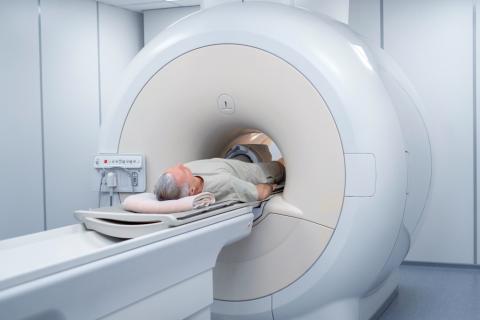
A model designed by a team of US researchers estimates that around 93 million computed tomography (CT) scans will be performed in the United States in 2023. The research, published in JAMA Internal Medicine, estimates that radiation from these scans could lead to 103,000 future cancers. If the same trend continues, cancers associated with these scans would account for 5% of all new cancer diagnoses per year in the US.
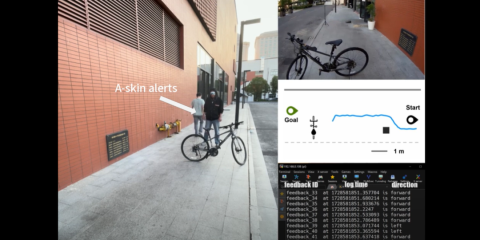
A team has developed a wearable designed to aid navigation for people who are blind or visually impaired. The system uses artificial intelligence (AI) algorithms to probe the environment and send signals to the wearer when approaching an obstacle or object. The technology, which is presented in Nature Machine Intelligence, was tested with humanoid robots and blind and partially sighted participants in both virtual and real environments.

According to a meta-analysis published in Nature Human Behaviour, the widespread use of digital technology may be associated with lower rates of cognitive decline in people over the age of 50. The results of the study — which analysed 57 studies involving more than 400,000 people with an average age of 69 — seem to contradict the hypothesis that the daily use of technology weakens cognitive ability.
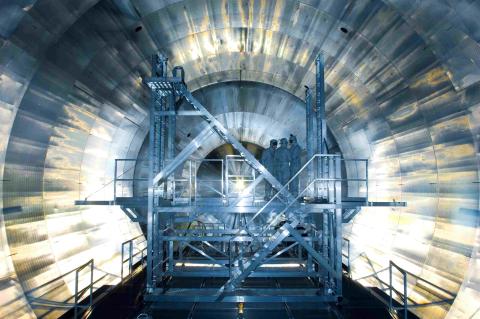
The KATRIN (Karlsruhe Tritium Neutrino Experiment) team has published the most accurate measurement to date of the upper limit of the neutrino mass in the journal Science, establishing it at 0.45 electronvolts (eV), less than a millionth of the mass of an electron. The KATRIN experiment, launched in 2018 in Germany, will finalise its neutrino mass measurement campaign this year, having reached 1,000 days of data acquisition.

In humans, larger birth canals are associated with slower labour and less back pain, but a higher risk of osteoarthritis of the hip, while narrower birth canals are associated with a lower risk of pelvic floor disorders, but a higher risk of obstructed labour, according to one study. The analysis published in Science is based on genetic and clinical data and bone densitometry images from more than 31,000 people in the UK Biobank to identify 180 genetic positions associated with seven ‘highly heritable’ pelvic characteristics.

Only 9.5% of plastics produced globally in 2022 were generated from recycled materials. The findings, published in Communications Earth & Environment, are part of a comprehensive analysis of the global plastics sector, which also reveals a large increase in the amount of plastic being disposed of by incineration and substantial regional differences in its consumption.

One of the problems with prostate cancer screening is that it results in a high rate of false positives, that is, erroneous diagnoses in people without the disease. A study in the UK has applied a genetic test to more than 6,000 people aged between 55 and 69, analysing 130 variants related to this tumour, which allows a ‘risk score’ to be calculated. According to the results, which are published in the journal NEJM, the test detected the disease more likely in people with higher values than traditional screening.

While some studies have suggested that having a mother with Alzheimer's may increase the risk of developing the disease, a new study reveals that having a father with the disease may be related to a greater spread of tau protein in the brain, which is a sign of the disease. The study, published in Neurology, does not prove that having a father with Alzheimer's causes these brain changes; it only shows an association.

Two independent teams have developed photonic computing chips - which use photons instead of electrons - that could help cope with the increased energy demanded by AI-based technologies. The work is published in two papers in the journal Nature. ‘Photonic computing has been decades in the making, but these demonstrations could mean that we can finally harness the power of light to build more powerful and energy-efficient systems,’ notes a piece accompanying the research in the same journal.