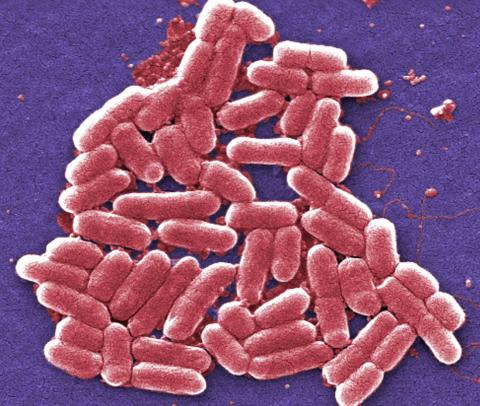
A study published today in Nature with the participation of the CNIO points to the bacterial toxin colibactin, produced by some strains of Escherichia coli, as a possible culprit in the increase in early-onset colorectal cancer. The study shows that exposure to the toxin during early childhood leaves a genetic signature in colon cells and demonstrates a substantial increase in these mutations in cases of colorectal cancer in people under 50.

An international team has successfully sent quantum messages 254 kilometres away using an existing telecommunications network in Germany. A quantum Internet would theoretically be faster and more secure, and this demonstration suggests that this type of communication can be achieved in real-world conditions. The results are published in the journal Nature.

An international team has analyzed the sudden changes in temperature that occurred in the world between 1961 and 2023. Their conclusions are that more than 60% of the regions included in the analysis - including Western Europe - have experienced an increase in the frequency and intensity of these sudden changes, which can endanger health, agriculture or infrastructures. Moreover, the trend will continue to rise as a result of climate change. The results are published in the journal Nature Communications.

A phase III clinical trial involving nearly 34,000 people shows that lowering high blood pressure reduces the risk of dementia and cognitive decline. Participants were aged 40 or older, lived in rural areas of China, and had untreated hypertension. The study results are published in Nature Medicine.

Up to 1.4 billion people may be living in areas with soil contaminated by heavy metals such as arsenic, cadmium, cobalt, chromium, copper, nickel and lead, according to research published in Science. The paper, which used data from more than 1,000 studies, estimates that 14-17% of farmland worldwide could be contaminated by at least one toxic metal. Cadmium is the most widespread, especially in South and East Asia, parts of the Middle East and Africa.

A new study sheds light on how the brain adjusts its ‘wiring’ during learning, concluding that different dendritic segments of the same neuron follow different rules for communicating through their connections - synapses. The findings challenge the idea that neurons follow a single learning strategy and offer a new perspective on how the brain learns and adapts its behaviour. The work, carried out in mice, is published in the journal Science.

Using data from the James Webb Space Telescope (JWST), a group of astronomers has detected the chemical fingerprints of dimethyl sulfide (DMS) and dimethyl disulfide (DMDS) in the atmosphere of exoplanet K2-18b, which orbits its star in the habitable zone. The detection has been published in The Astrophysical Journal Letters.

In recent decades, the rate of pollen allergies has increased worldwide. One of the reasons being considered is the increase in atmospheric nitrogen pollutants. Now, a study published in the journal The Lancet Planetary Health estimates that grasslands fertilised with nitrogen release six times more pollen and that this pollen is five times more allergenic than that from unfertilised fields.
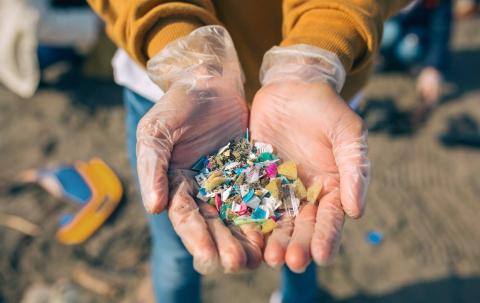
Research published in Science Advances concludes that the level of microplastics in the environment could be three times higher in 2060 than in 2019, even if one of the two more ambitious policy scenarios proposed by the OECD to reduce plastics is implemented.

Two independent clinical trials demonstrate the safety of stem cell therapies for Parkinson's disease. The papers, published in Nature, investigate the use of cells derived from human induced pluripotent stem cells and human embryonic stem cells, respectively. Parkinson's disease is characterised by the progressive loss of dopamine-producing neurons. Cell therapy, which replenishes dopamine-producing neurons in the brain, could provide a treatment with fewer adverse effects than current treatments. However, further research is needed to test the efficacy and benefits of these new therapies.