
Genome analysis of 11,555 individuals revealed 60 genes involved in congenital heart disease, according to a study published today in the journal PNAS. Congenital heart disease is one of the most common birth defects and affects between 1 and 1.8% of live births.

In marathon runners, the myelin content of specific regions of the brain is reversibly reduced, according to a study carried out in the Basque Country. This observation is consistent with animal evidence suggesting that myelin lipids - a substance that surrounds neurons - can act as energy reserves in extreme metabolic conditions, as detailed by the authors in Nature Metabolism. The analysis is based on magnetic resonance imaging of eight men and two women before and after running a marathon. According to the study, the myelin content was fully recovered two months after the race.

A study reveals that most of the carbon dioxide (CO2) absorbed by ecosystems has been stored in dead plant material, soils and sediments, and not in living biomass. These data, which suggest that terrestrial carbon reserves are more resistant and stable than previously believed, are crucial for designing future climate change mitigation strategies and optimising carbon sequestration efforts. The findings are published in the journal Science.

Two international teams have independently discovered the presence of oxygen in the galaxy JADES-GS-z14-0, the most distant known. The finding, which has been made using the ALMA telescope at the European Southern Observatory (ESO), could mean that galaxies evolved much earlier than previously thought. The results are published in the journals Astronomy & Astrophysics and The Astrophysical Journal.

Today the Spanish Parliament rejected the creation of the State Public Health Agency, a proposal that had been envisaged since the Public Health Act of 2011 and whose idea of implementation had resurfaced after the pandemic.

Despite the overwhelming evidence, climate change denialist messages have found a loudspeaker in certain social networks. Of importance in this disinformation strategy is the attempt to discredit the scientific community in general, and climate researchers and weather forecasters in particular. However, the study of climate and the prediction and monitoring of adverse weather phenomena is in the interest of society as a whole.
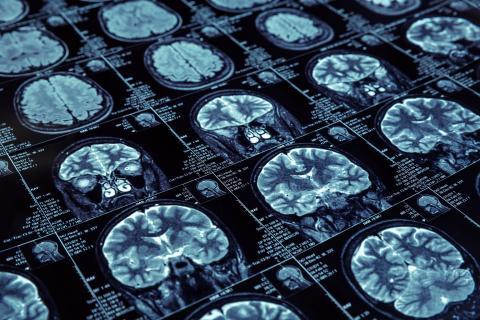
The DIAN-TU platform is an initiative to test Alzheimer's disease treatments early, by recruiting people with a mutation that leads to developing the disease in the future. One of the trials with the anti-amyloid drug gantenerumab ended without reaching the targets. However, a continuation of the study in 73 patients suggests - for the first time, according to the authors - that long-term, high-dose treatment given some time before symptoms develop could delay the onset of the disease. The results are published in the journal The Lancet Neurology.
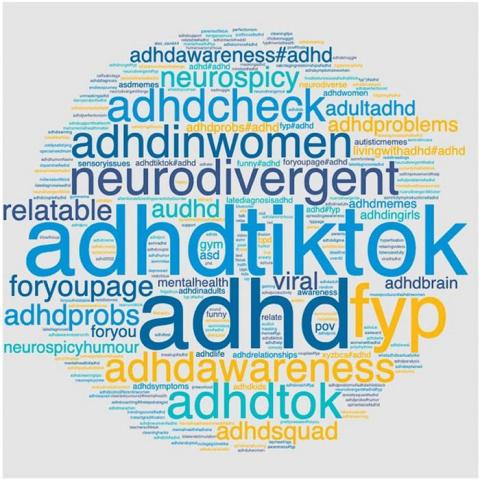
Around half of the 100 most popular videos on TikTok about Attention Deficit Hyperactivity Disorder (ADHD) contain statements that diverge from the scientific literature of reference, according to a study published in PLOS ONE. In addition, the research shows that there are discrepancies between young people and mental health professionals about the educational value of the content about ADHD on this social network.

In mice, a therapy based on editing regulatory T-cells can suppress an immune reaction against gluten, according to a study in Science Translational Medicine. Studies in animals with coeliac disease would be needed to assess the efficacy of this cell therapy in restoring gluten tolerance, the authors say.
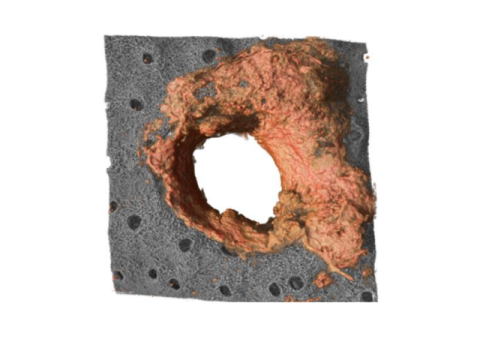
A CNIC research team has identified a population of skin neutrophils that reinforce the physical protection of the tissue against infection. These immune cells are known for their microbicidal role, and the study published in Nature reveals that they also produce an extracellular matrix that reinforces the physical barrier of the skin.