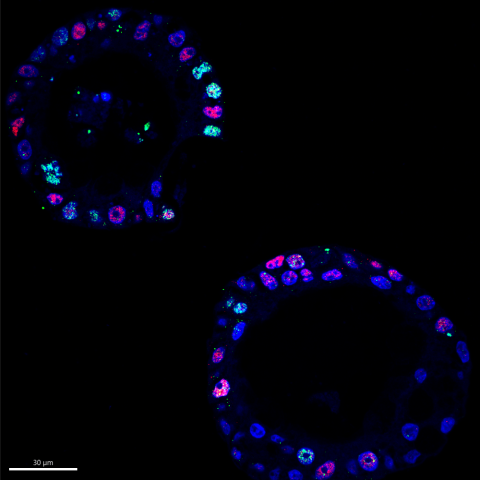
Extrachromosomal DNA circles are structures that appear floating in the nucleus of cells in some tumours and are associated with a poor prognosis. Now, an international team has studied the mechanism by which they could contribute to the aggressiveness of pancreatic cancer. The circles may contain an oncogene called Myc that promotes growth. Furthermore, their quantity increases or decreases to adapt to the environment. Although they were only observed in 15% of the cases studied, the discovery could open up new possibilities for treatment, according to the authors. The results are published in the journal Nature.

On Tuesday the European Commission presented the draft of its new Critical Medicines Act. Its objective is to address the serious shortage of medicines and healthcare products, reduce external dependence on critical medicines and ingredients — especially from Asia — and guarantee the supply of affordable medicines in the European Union.

A study led by ISGlobal researchers has analysed how the loss of Arctic sea ice influences climate in isolation from other factors related to climate change. Their results, published in the journal Communications Earth and Environment, show that, on a time scale of decades, the loss of Arctic sea ice favours a drier climate in the southwestern United States -in particular in California-, especially in winter. This phenomenon would also affect the climate of Spain and Portugal, leading to wetter conditions in winter, although the effect is weaker.

Epstein-Barr virus infection appears to be a necessary condition for developing multiple sclerosis, but the specific mechanisms that cause it in some people are not known. An international study of more than 1,300 people, including 650 patients, has found that elevated production of certain antibodies increases the risk of developing the disease. These antibodies target a specific protein in the virus, but can in turn act in a cross-species manner and damage other similar proteins in the nervous system. The results are published in the journal PNAS.
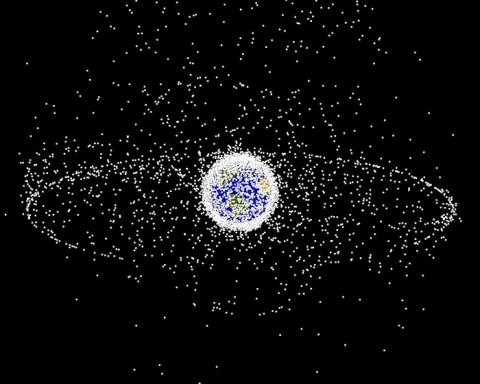
The maximum number of artificial satellites that can safely orbit the Earth could be reduced due to the increase in greenhouse gas emissions of human origin, according to a modelling study. The increase in these gases may result in a reduction in the density of the planet's orbital space. Between 2000 and 2100, the carrying capacity of satellites between 200 and 1,000 kilometres altitude could be reduced by between 50 and 66%, estimates the study published in Nature Sustainability.

Glaucoma is the leading cause of irreversible blindness worldwide and one of its potential risk factors is high myopia. Its early diagnosis is crucial, but also difficult due to the absence of symptoms. With the help of experts, we answer the main questions about this eye disease.

In 2050 there will be 25.2 million people with Parkinson's disease worldwide, which represents an increase of 112% from 2021, largely due to the ageing of the population, according to a modelling study published by The BMJ. The number of people living with this disease – prevalence across all ages – per 100,000 inhabitants is expected to increase by 76% – and by 55% when age differences are corrected.

A study led by researchers in Canada has analysed the relationship between perimenopausal symptoms and later cognitive and behavioural problems in nearly 900 women. Their findings are that those with more symptoms were more at risk of cognitive problems and dementia later in life. The results are published in the journal Plos One.

An international team has found that aspirin is capable of reducing the appearance of metastasis in mice, by enabling the activation of T lymphocytes capable of recognising tumour cells. The research showed that several different mouse cancer models — including breast cancer, colon cancer and melanoma — treated with aspirin showed a lower rate of metastasis in other organs, such as the lungs and liver, compared to untreated mice. According to the authors, who publish the results in the journal Nature, ‘the finding paves the way for the use of more effective anti-metastatic immunotherapies’.

Colossal Biosciences has announced the creation of genetically modified mice with characteristics reminiscent of the fur of extinct mammoths, such as fur colour, texture and thickness. The non-peer-reviewed results were shared today in the BioRXiv prepublication repository.