
A paper published in The Lancet Respiratory Medicine has analyzed new cases of lung cancer worldwide during the year 2022. While the incidence in women continues to approach that of men, the decrease in tobacco consumption in many countries causes the proportion of cases in non-smokers to increase. This increase is associated with air pollution, especially in countries such as China.

Results from a cohort study of more than 100,000 people reveal the strong and persistent association of headache diagnoses with attempted and completed suicide. The authors suggest that behavioural health assessment and treatment may be important for these patients. The paper is published today in the journal JAMA Neurology.
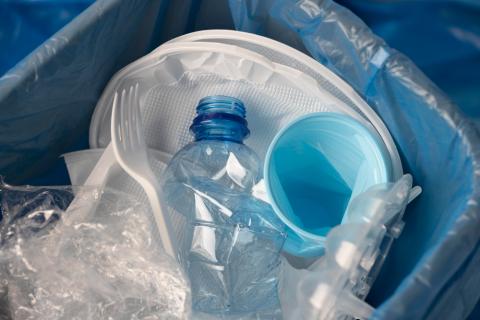
A multidisciplinary team of US researchers has analyzed the presence of micro- and nanoplastics in 52 human cadavers between 2016 and 2024. The concentrations of these particles were higher in the brain than in the liver or kidneys. They were also higher in the brains of people with dementia, although the researchers acknowledge that causality cannot be established. The results are published in the journal Nature Medicine.
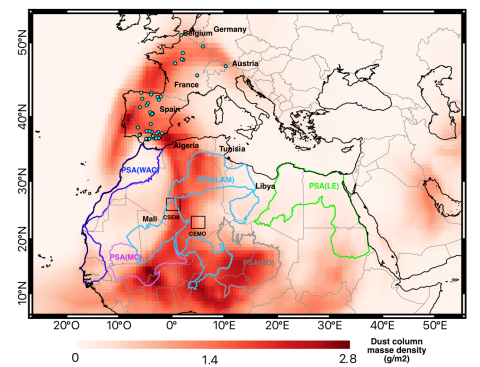
The Saharan dust intrusion that reached Spain and other European countries in March 2022 posed no risk to human health in terms of exposure to radioactivity, according to an analysis of samples collected by citizens in Spain, Germany, Austria, Belgium, France, Belgium, France, and Luxembourg. The dust came from southern Algeria, says the analysis published in Science Advances, and contained plutonium isotopes characteristic of nuclear tests conducted by the U.S. and the Soviet Union - not from French tests in the Reggane area in the 1960s.

Populist movements often pit people against political elites, but they can also target academic elites. Science-related populism pits ‘ordinary people’ and common sense against academic elites and scientific knowledge. A report published by FECYT analyses this phenomenon in Spain for the first time. Science Media Centre España organised an informative meeting with its authors to explain the main results.

World Cancer Day is celebrated on 4 February. Behind the cases of this disease there are people who, although they have overcome it, bear the burden of the diagnosis years after the end of their treatment. Survivors demand the right to be forgotten so as not to suffer financial, employment and social discrimination.

The Spanish Foundation for Science and Technology (FECYT) has produced a report that compiles the results of a pioneering survey in the country on populist attitudes related to science. The research explores, among other issues, the consumption of scientific information, public perceptions of the role of science in politics and society, the benefits of science, attitudes towards technologies such as vaccines and issues such as climate change.

A meta-analysis that brings together data from 628 species of animals, plants and other organisms in terrestrial and marine ecosystems over the last three decades shows that most are losing genetic diversity, especially mammals and birds. ‘The threats affected two thirds of the populations we analysed and less than half are subject to conservation management measures,’ say the authors of the research, published in Nature.

Exposure to cold and heat could affect adolescents' mental health, according to a study published in JAMA Network Open. The research, led by the Barcelona Institute for Global Health (ISGlobal), was conducted with nearly 5,000 adolescents from the Netherlands (3,934) and Spain (885). The results showed how exposure to environmental temperatures influences psychiatric symptoms such as anxiety, depression, and attention problems.
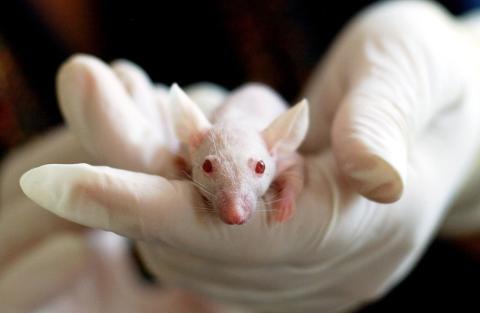
A team of researchers has used embryonic stem cell engineering to create a bipaternal mouse - a mouse with two male parents - that lived to adulthood. Their results, published in the journal Cell Stem Cell, show how targeting a particular set of genes involved in reproduction enabled this breakthrough in unisexual reproduction in mammals.