
The red colour of Mars corresponds to a type of ferrihydrite that is the dominant form of iron oxide in Martian dust, although previous studies have attributed it to anhydrous haematite. The persistence of ferrihydrite, whose formation requires water, suggests that it formed during a cold, wet period, followed by a transition to the planet's current arid environment. The result, based on ESA and NASA space data and new laboratory experiments, is published in Nature Communications.

People with dementia who are prescribed a specific type of antidepressant experience a faster cognitive decline than people who do not use these drugs, according to a study published in BMC Medicine. In particular, prescriptions for higher doses of selective serotonin reuptake inhibitors (SSRIs), a type of antidepressant, were associated with a higher risk of severe dementia, fractures and mortality. The analysis includes data from more than 18,000 patients from a Swedish database between 2007 and 2018.

One study suggests that conservation efforts are concentrated around a small number of charismatic species, such as elephants. However, there are undervalued species, such as fungi, plants and invertebrates, that are critical to the functioning of ecosystems. The research, published in the journal PNAS, analysed more than 14,000 conservation projects spanning a 25-year period - from 1992 to 2016. Of the nearly $2 billion allocated by the projects, 83% went to vertebrates. Plants and invertebrates each received 6.6% of the funding, while fungi and algae received less than 0.2%.
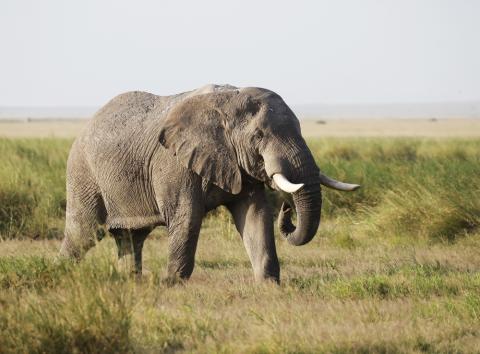
Peto´s paradox is the lack of observed relationship between the size of an animal and the prevalence of cancer, despite the fact that the greater number of cells and divisions as they get larger should increase the likelihood of cancer. A new study disproves this paradox by finding that, at least in terrestrial vertebrates, larger species do develop more cases of cancer. In quite a few of them, however, the increase is less than would be expected, suggesting that they have evolved anticancer mechanisms that remain worth studying. The results are published in the journal PNAS.

An international team has analysed data on the incidence and mortality of breast cancer in 185 countries. In 2022, 2.3 million new cases and 670,000 deaths were recorded and, with this trend, it is predicted that by 2050 these figures will increase by 38% and 68% respectively, particularly affecting low-income countries. Although the mortality rate fell in 30 of the 46 countries studied over the last ten years, only seven of them met the WHO targets of reducing it by at least 2.5% each year. The results are published in the journal Nature Medicine.

A meta-analysis that included 45 studies involving more than 330,000 people has analysed the association between the time spent exposed to digital screens and the risk of developing myopia. The results of the study, published in JAMA Network Open, show that the risk of myopia increased significantly by just over 20% for every hour of daily use after the first hour.

According to a new study published in Science, a machine learning-based artificial intelligence (AI) system - called Mal-ID - can decipher an individual's history of infections and diseases in the immune system. The authors say this provides a powerful tool with the potential to accurately diagnose autoimmune disorders, viral infections and vaccine responses.

Aspartame, a common sweetener used in many sugar-free foods and drinks, affects the cardiovascular health of mice and monkeys, a study claims. Consuming aspartame increases the animals' insulin levels and contributes to the development of atherosclerosis, the buildup of fatty plaque in the arteries, according to the research article published in Cell Metabolism.

An international team has analyzed data from nearly half a million people to analyze the influence of genes or environment on mortality, age-related diseases and aging. Although the relationship may vary according to the type of disease, their conclusions are that the environment -especially socioeconomic conditions, smoking habits and physical exercise- has a much greater influence than genetics in all the aspects studied. Among other data, environment explains 17 % of the variation in mortality risk, while genetics is limited to 2 %. The results are published in the journal Nature Medicine.

From 2011 to 2019, improvements in life expectancy slowed down in many European countries and many experienced declines in this indicator during the Covid-19 pandemic (2019-2021), according to a study published in The Lancet Public Health. The research shows that the average annual improvement in life expectancy fell from 0.23 years (1990-2011) to 0.15 years (2011-2019) in 20 European countries, including Spain.