
The budget cuts affecting scientific activity in countries such as the United States and the fragility of centralised systems make decentralised and collaborative models a necessity. Science, intrinsically global, requires structures that can withstand local pressures. In this situation, Europe has the opportunity - and the duty - to lead a new paradigm where data is free, secure and accessible.

Clear evidence of human-induced climate change reached new heights in 2024 and some of the consequences will be irreversible for hundreds or thousands of years, according to the World Meteorological Organisation's State of the Global Climate 2024 report. It also highlights the enormous economic and social impacts of extreme weather conditions.

Grass-fed beef is not less carbon intensive than industrial beef, even after correcting for soil sequestration enhancement by rangeland grazing, according to a study published today in the journal PNAS that analysed emissions and livestock data from the United States.

A team in the US has tested the efficacy of baloxavir, an antiviral already on the market for treating common flu, against avian influenza in mice. The results, published in the journal Nature Microbiology, show that it is more effective than the currently recommended oseltamivir (Tamiflu) except when the infection is via the mouth, in which case it is equally effective. According to the authors, baloxavir ‘could be considered for the potential treatment of serious H5N1 virus infections in humans’.

Until now, one hypothesis suggested that life on Earth could have arisen from lightning striking a body of water. However, a new study claims that the synthesis of molecules necessary for the emergence of life could have originated from ‘micro-lightning’ in water droplets. According to the study, published in Science Advances, the formation of organic compounds with carbon-nitrogen bonds from gas molecules could be a possible mechanism for creating the basic components of life on the early Earth.
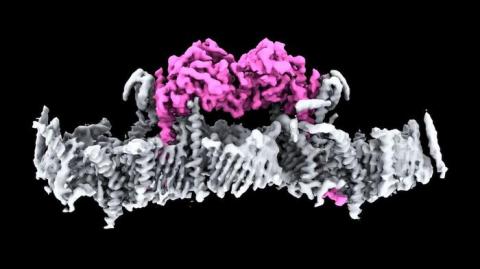
Discovered years ago, PINK1 is a protein directly linked to Parkinson's disease, but it was not known what it looks like, how it binds to the surface of damaged mitochondria or how it is activated. A study published this week in Science has for the first time determined the structure of this protein. The authors suggest that this new information could help in finding new treatments.

23% of people infected with SARS-CoV-2 between 2021 and 2023 developed long covid and more than half of them had persistent symptoms for two years. These are the main conclusions of a study led by ISGlobal that followed more than 2,700 people in Catalonia. The results are published in the journal BMC Medicine.

In women, high consumption of sugary drinks is associated with an increased risk of oral cavity cancer, according to a study published in JAMA Otolaryngology-Head & Neck Surgery. Among research participants who consumed one or more sugary drinks per day, the rate of these cancers was 5 cases per 100,000 people, compared to 2 cases per 100,000 among those who drank less than one per month. The analysis is based on data from more than 162,000 nurses followed for 30 years in the United States. According to the authors, further studies with larger samples, including men, are needed to validate these results.

An international team has developed an implantable neuroprosthesis in the spinal cord that can interact with various robotic devices and enable movements in people with severe spinal cord injuries. The study, conducted in nine patients, showed that the device facilitated robotic-assisted walking and cycling and promoted neuromuscular activation. The results are published in the journal Science Robotics.

A fragment of a human face discovered in 2022 at the Sima del Elefante site in the Sierra de Atapuerca (Burgos) and dated to between 1.1 and 1.4 million years ago represents the oldest known face in Western Europe. The fossil, nicknamed ‘Pink’, does not belong to Homo antecessor, but has been provisionally catalogued as Homo affinis erectus. The find, which is published in the journal Nature, could indicate that Western Europe was populated by at least two species of hominids during the Early Pleistocene: Homo affinis erectus and, later, Homo antecessor.