
A team led by the CEU San Pablo University has analysed the role of vaccination against influenza on the risk of infection and mortality. The meta-analysis, published in European Respiratory Review, includes 192 articles from different countries over the last 20 years and includes data from more than 6.5 million patients. The results show that the level of protection varies according to age group and influenza subtype. Although it does not reduce the risk of infection for influenza A H3N2 in those over 65 years of age, nor does it show a reduction in mortality for influenza B - which is less associated with mortality than influenza A - overall, vaccination is shown to be effective in both preventing infection and reducing mortality.
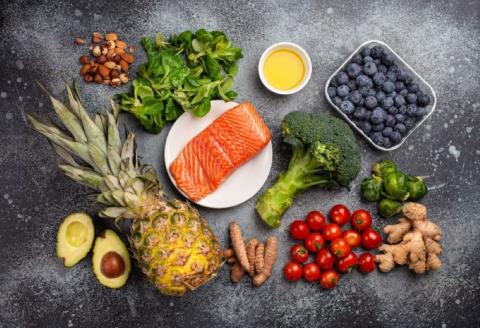
Inflammation is all the rage. In fact, anti-inflammatory diets that claim to fight it. This is attested to by best-selling books and influencers, ready to give us the latest tips on how to lose weight, or rather, how to reduce inflammation. But what's the truth in all this, and what does inflammation have to do with being overweight?

At this point, it is difficult to decide which science news has been the most relevant to make one of those end-of-year lists that we like so much. Luckily, the SMC Spain metrics help us to make this selection with a criterion that does not have the consistency of a peer review, but that works: the democracy of the click. These are the ten most visited articles (and a self-promotion tip).

UNESCO has proclaimed 2025 as the International Year of Quantum Science and Technology. This initiative aims to ‘raise public awareness of the importance of quantum science and its applications’, as well as to celebrate and recognise 100 years since the initial development of quantum mechanics. But why is this scientific discipline so relevant? We explore with experts the key issues and the impact of quantum science and technology on the development of our society.

People who grow up with more brothers or sisters may have a more cooperative personality, i.e. with traits such as honesty, humility and agreeableness, according to a study published in PNAS. Using data from 700,000 adults surveyed online, the research concludes that mean honesty-humility and agreeableness scores are slightly higher in people with more siblings. Among those with the same number of siblings, people born middle and last have a slightly higher mean score than firstborns.

According to a meta-analysis of 14 studies involving more than 25,000 people, drinking more than four cups of coffee per day was associated with a lower incidence of head and neck tumors. Drinking between none and one cup of tea was also associated with a slightly decreased risk, although daily consumption of more than one cup of tea was associated with an increased risk of developing laryngeal cancer. The results are published in the journal Cancer.

A team in the US has for the first time achieved quantum teleportation over 30 kilometres of fibre-optic cable already carrying internet data traffic, says a study published in the journal Optica. This type of teleportation would allow quantum communication to be combined with existing internet cable infrastructure.
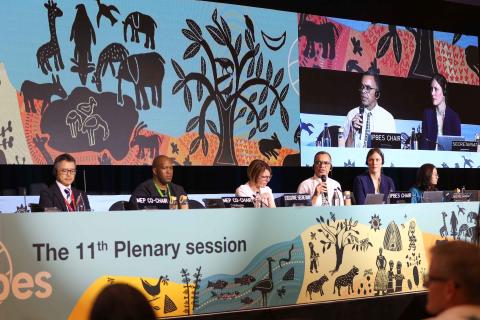
Meeting in the city of Windoek (Namibia), the plenary of the IPBES - Intergovernmental Science-Policy Platform on Biodiversity and Ecosystem Services - has ratified two new reports: the Nexus Assessment and the Transformative Change Assessment. Three of their authors explained the main findings and the changes they propose at a briefing organised by SMC Spain.

In a group of people at high cardiovascular risk, low to moderate wine consumption was associated with fewer cardiovascular events (cardiovascular death, myocardial infarction, stroke or heart failure), according to a study. The analysis uses urinary concentrations of tartaric acid, a substance found in grapes and grape derivatives, as a biomarker of wine consumption. It finds that consuming between three and 35 glasses per month was associated with fewer cardiovascular events than in people who consumed fewer than three or more than 35 glasses. The study, published in the European Heart Journal, included more than 1,200 participants from Spain's PREDIMED study with an average age of 68 years.

A meta-analysis published in The Lancet Psychiatry compared various pharmacological and non-pharmacological treatments for Attention Deficit Hyperactivity Disorder (ADHD) in adults. The authors found that only stimulants and atomoxetine effectively reduce symptoms after 12 weeks, but warn that the drugs are not well tolerated by everyone, that they found no evidence that they improve quality of life and that their long-term effects are unclear.