Reactions

Reactions

Reactions

When science hits the headlines, we seek the views of expert sources who assess the news rigorously and quickly, according to the available evidence.

Genomic analysis clarifies the chronology of Neanderthal-modern human admixture and its genetic impact on our species

A team of researchers has analyzed more than 300 human genomes from the last 50,000 years and has concluded that most of the gene flow we received from Neanderthals is attributable to a single period, which probably occurred between 50,500 and 43,500 years ago. In addition, Neanderthal inheritance underwent rapid natural selection in subsequent generations, especially on the X chromosome, according to a study published in Science.

0

'Science' magazine chooses lenacapavir to prevent HIV infection as breakthrough of the year

Science magazine has named lenacapavir as breakthrough of the year. Lenacapavir is an injectable drug that prevents HIV infection for six months with near 100% efficacy. The publication notes its potential to dramatically reduce infections in high-risk populations, but also reminds that global roll-out will depend on affordability, manufacturing agreements and a robust health infrastructure. Approval of the drug is expected by 2025. 

0

Incidence of colon cancer continues to rise in young people in many high-income countries, although not in Spain

A team of researchers has analyzed data from the World Health Organization to estimate the incidence of colorectal cancer in 50 countries around the world. Their conclusions, based on records up to 2017, are that in most high-income countries its incidence continues to increase in young people (under 50 years of age). This increase, however, is not observed in Spain. The results are published in the journal The Lancet Oncology.   

0

Clinical trial demonstrates efficacy of RH5.1/Matrix-M malaria vaccine in babies in Burkina Faso

The RH5.1/Matrix-M vaccine is effective and safe against malaria, according to a phase 2b clinical trial in infants in Burkina Faso published in The Lancet Infectious Diseases. Two other vaccines are already approved against malaria, a disease caused by the Plasmodium falciparum parasitebut this one acts at a different stage of the disease: when the malaria parasite is present in the blood. The other two vaccines attack the parasite when reaches the liver.

0

Study identifies proteins linked to brain ageing

Researchers in China have analysed data from more than 4,500 people and identified 13 proteins linked to brain ageing. In addition, changes in protein concentrations in the blood tend to peak at ages 57, 70 and 78. According to the authors, who publish the results in the journal Nature Aging, these ages may reflect transitions in human brain health at specific ages, and could therefore be important for designing possible interventions in the brain ageing process.

0

Population in drylands could double by 2100 under worst-case climate change scenario

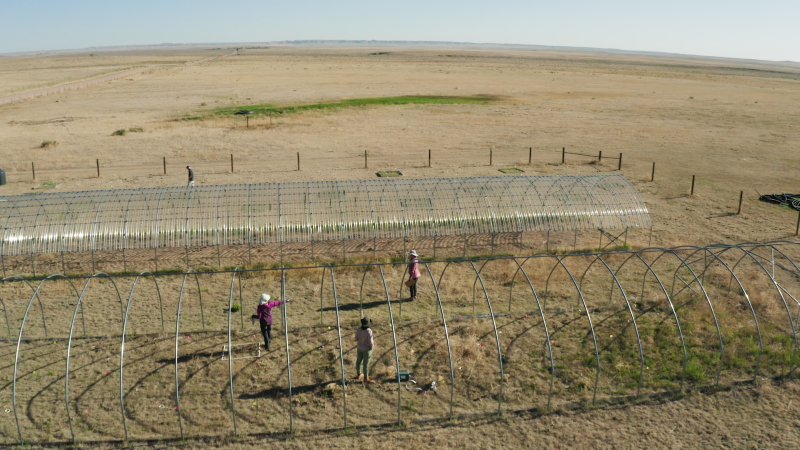
More than three-quarters of the earth's land surface experienced drier climates between 1990 and 2020 compared to the previous three decades, according to a new report by the United Nations Convention to Combat Desertification. Over the past 30 years, 40.6 percent of the global landmass, excluding Antarctica, is classified as drylands, three percentage points more than the previous three decades. The report, which is being presented at the COP16 on desertification being held in Riyadh, Saudi Arabia, also shows that 2.3 billion people were living in drylands in 2020, a population that could rise to 5 billion by 2100 under a worst-case climate change scenario.

0

Prenatal cell-free DNA testing can incidentally detect maternal cancer

Cell-free DNA (cfDNA) sequencing analysis for fetal aneuploidies - chromosomal abnormalities - can incidentally detect maternal cancer, according to a study published in NEJM. Researchers screened 107 pregnant and postpartum mothers with no symptoms of cancer, but who had received unusual clinical cfDNA sequencing results, for cancer. In this sample, cancer was present in 48% of the women.

0