Reactions

Reactions

Reactions

When science hits the headlines, we seek the views of expert sources who assess the news rigorously and quickly, according to the available evidence.

Reaction to study proposing new mechanism to explain asthma attacks

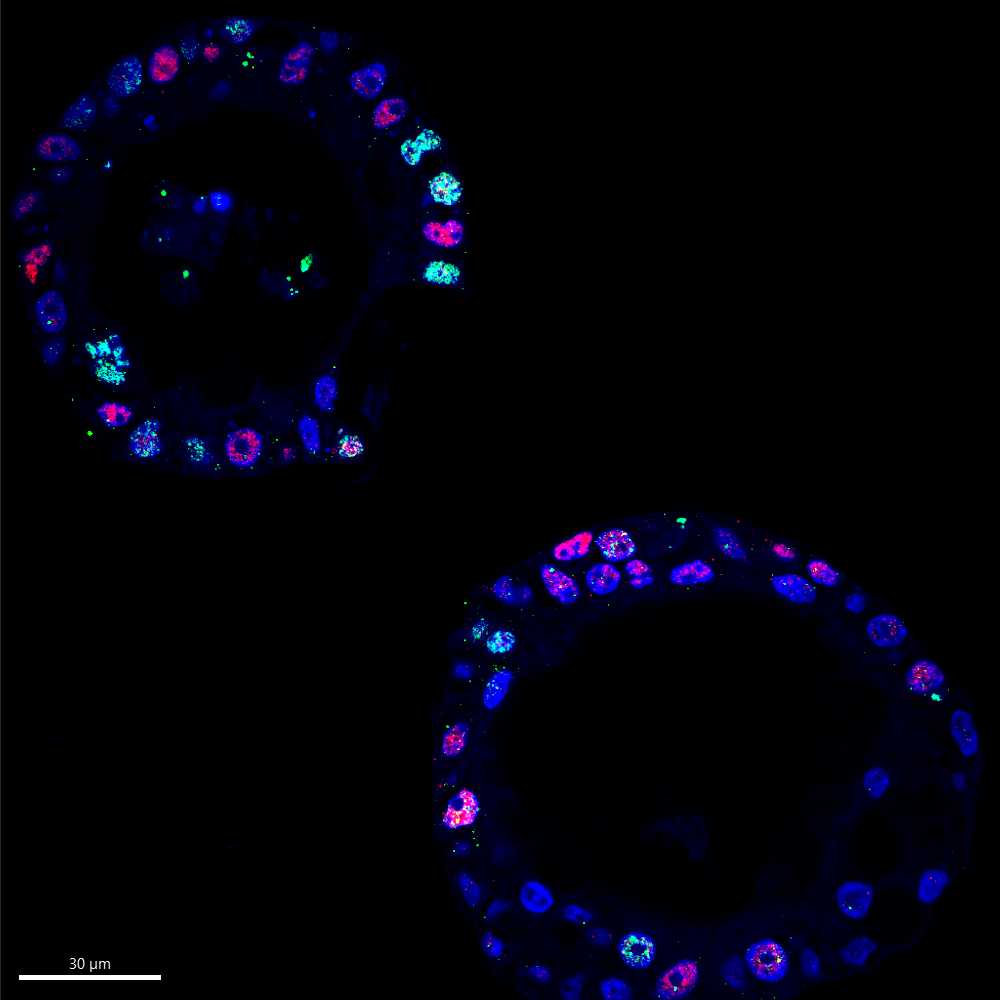
An international team of researchers, with Spanish participation, has proposed in the journal Science a new mechanism to explain asthma attacks more fully. According to their hypothesis, the mechanical forces that occur during these episodes cause cells to accumulate in excess, leading to a process of elimination called "cell extrusion". As a result, the tissue is damaged, loses its barrier function and increases the risk of successive attacks. Inhibitors of this mechanism improved damage and inflammation in laboratory mice. 

0

Reaction: covid-19 replaced stroke as second leading cause of death globally in 2021

In 2021, covid-19 replaced stroke as the second leading age-standardised cause of death, with 94 deaths per 100,000 people, says a study published in The Lancet. The pandemic changed the ranking of the five leading causes of death that had remained stable since 1990, according to the study, which is based on data from the Global Burden of Diseases, Injuries, and Risk Factors Study. The study found that life expectancy since 1990 increased by 6.2 years, an increase that slowed during the pandemic.  

0

Reactions to phase 2 clinical trial testing an oral antidiabetic as a treatment for Parkinson's disease

A phase 2 clinical trial in France has examined whether taking an oral anti-diabetic drug called lixisenatide - a GLP1 receptor analogue, similar to those also used for weight loss - also has an effect on the progression of Parkinson's disease. The results indicate that there is a modest but significant decrease in the progression of motor symptoms of the disease, although side effects were also observed. The results are published in the journal NEJM

0

Reactions to study linking rare genetic variants with left-handedness

10 % of people are left-handed, which occurs when the right cerebral hemisphere is more dominant for the control of that hand - whereas it is the left hemisphere in the case of right-handed people. To investigate the genetic basis of this laterality, scientists in the Netherlands have analysed genome data from 350,000 people in the UK biobank for rare genetic variants associated with this phenomenon. The heritability of left-handedness due to rare coding variants was low, at less than 1%. The research, published in Nature Communications, suggests that one gene - TUBB4B - is 2.7 times more likely to contain rare coding variants in left-handed people. 

0

Reactions: Analysis of 2013 data estimates that most CAP funds go to emissions-intensive animal production

Eighty-two percent of EU farm subsidies articulated through the Common Agricultural Policy (CAP) financed high-emission livestock production in 2013, according to a study published in Nature Food. The analysis, which is based on data from 1986 to 2013 - the latest year for which records are available - highlights that 82% went to animal products in the following proportions: 38% directly and 44% for feed production. The authors note that food of animal origin is associated with 84 % of the greenhouse gases emitted by EU food production. 

0

Reaction: heat waves move more slowly, which exacerbates their effects

A study has analysed data on heat waves from 1979 to 2020 and concludes that their propagation speed has decreased over the last 40 years due to anthropogenic causes. In addition, their frequency, intensity and travel distance have increased. According to the authors, "longer-lasting and slower-moving heat waves will cause more devastating effects on natural and social systems in the future if [greenhouse gases] continue to increase and effective mitigation measures are not taken". The findings are published in the journal Science Advances.  

0

Reaction: Experts call in 'Science' for mandatory standards to ensure ventilation in public buildings

The journal Science publishes an article in which international experts demand mandatory standards to monitor three parameters within public buildings: carbon dioxide (CO2), carbon monoxide (CO), and PM2.5 (fine particles that can enter the lungs and bloodstream), as well as to ensure proper ventilation.


0

Reactions: some progesterone analogues increase risk of developing a type of brain tumour, study finds

A French study involving more than 100,000 women has found a link between long-term use of some progesterone hormone analogues - used for contraception or hormone replacement therapy - and an increased risk of developing meningioma, a generally benign type of brain tumour. The results are published in The BMJ. 

0