Every week, the Science Media Centre Spain team reads hundreds of headlines and news alerts for potential news to cover. Our specialty is to generate useful content on science topics that ignite public debate; therefore, we take great care in the selection of stories and spend a good proportion of our time debating what we should and should not give. To end the year, we wanted to tell you part of our intrahistory.

A volcano located about four kilometres from the town of Grindavík in southwest Iceland erupted last night. The eruption follows very intense seismicity in the area last November. The Icelandic Meteorological Office (MET) reports that the eruptive fissure is about four kilometres long.

A dose of psilocybin—a hallucinogenic substance—administered to groups of 3 or 4 people suffering from cancer and depression may help reduce their depressive symptoms, according to a clinical trial conducted in the United States. The study involved 30 patients who also received individual and group therapeutic support. In another article, also published in the journal Cancer, the authors examine how the study participants perceived the therapy.

The European Medicines Agency (EMA) has recommended approval of the first drug in the European Union to use the CRISPR/Cas9 gene-editing technique. The drug, Casgevy, is indicated for the treatment of two rare inherited diseases, beta thalassaemia and sickle cell disease (sickle cell anaemia), caused by genetic mutations that affect the production or function of haemoglobin, the oxygen-carrying protein in red blood cells. Both conditions are debilitating and potentially fatal. The EMA opinion will be sent to the European Commission for a decision on an EU-wide marketing authorisation.

The largest meta-analysis to date that studies the risk of children of people with a mental disorder also suffering from some type of mental disorder during their lifetime has been published, with Spanish participation. According to the study, the risk is more than double that of the rest of the population. To explain the study and resolve any doubts that may arise, the Science Media Centre Spain organised an information session with one of the authors, psychiatrist Joaquim Raduà.

In the year 2023, Science magazine has chosen the development and discovery that GLP-1 medications, agonists of the glucagon-like peptide-1, can mitigate health issues associated with obesity as the most important scientific breakthrough. Similarly, Nature magazine has selected biochemist Svetlana Mojsov, a key figure in the discovery of GLP-1, as one of the top ten scientists of the year.

A meta-analysis by the University of Valencia has studied the links between leisure reading habits on digital devices and the reading comprehension of students of different ages. The research - which is based on 25 studies published between 2000 and 2022 involving some 470,000 students from different countries - concludes that in the early stages (primary and 1st and 2nd ESO in the Spanish case) there were small negative relationships between digital leisure reading and reading comprehension, while in later stages (3rd and 4th ESO, baccalaureate and university) the relationship became slightly positive. The research is published in Review of Educational Research.

An international team, led by the Hospital Clínic-IDIBAPS in Barcelona together with King's College London (UK) and Dalhousie University (Canada), has published the largest meta-analysis to date studying the risk of children of people with mental disorders developing the same, or another type of disorder. The study included more than three million children of parents with different types of disorders and more than 20 million people as a control population. The results, published in the journal World Psychiatry, indicate that, overall, the former have a 1.5 to 3 times higher risk of developing a disorder in their lifetime. According to the authors, in the case of bipolar, depressive or anxiety disorders, the risk of their offspring suffering from some type of disorder is more than 50%.
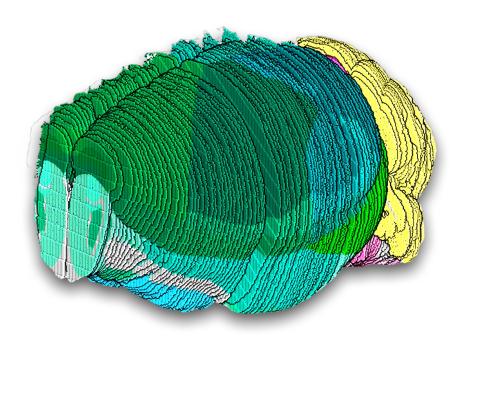
Nine studies published today in the journal Nature present the most comprehensive and detailed characterization of the mouse brain. The findings reveal the structure and organization of the brain, the function of individual brain cells, and neural circuits. According to the authors, these investigations serve as a tool to delve into the development and evolution of mammalian brains, and how the organization of different types of cells could contribute to neurological disorders in humans.

After an intense night of negotiations in Dubai (United Arab Emirates), the countries participating in COP28 reached a historic agreement by mentioning for the first time "moving away from fossil fuels" in the Global Stocktake document - the assessment of progress made towards achieving the climate goals set out in the Paris Agreement. The agreement comes after the first draft presented by the presidency did not make this mention - it referred only to "reducing consumption and production" of these fuels - which was described as "unacceptable" by countries such as Spain.