
According to a large long-term study published in BMJ Public Health, people who cycle or walk to work or school have a lower risk of mental and physical illness. Cyclists benefit the most, with a 47% lower risk of death from any cause, a 24% lower risk of hospital admission for cardiovascular disease, a 51% lower risk of dying from cancer and a 20% lower risk of being prescribed drugs for mental health problems.

Hormonal therapy to treat breast cancer is associated with a lower risk of Alzheimer's disease and dementia in women over 65, a study says. The retrospective analysis is based on data from more than 18,000 women with breast cancer in the US: two-thirds of them had received hormone therapy and one-third had not. The "protective effect" of hormone therapy declines with age and varies by ethnicity, adds the article published in JAMA Network Open.

Climate change is influencing the length of the day, according to an analysis published in PNAS. As melting ice accelerates due to rising temperatures, sea levels rise and large masses move from the polar to the equatorial regions. This redistribution affects the Earth's rotation and results in longer days. During the 20th century, sea level variations were associated with changes in day length between 0.3 and 1 millisecond per century, but since 2000 this variation has increased to 1.33 (±0.03) milliseconds per century and the authors estimate that it will accelerate further in the coming decades.

Adolescent boys respond aggressively when they perceive that their masculinity is threatened, an analysis shows. In the study, aggression was higher when boys' motivation to follow what is considered 'typical' for their sex came from external expectations - for example, when their parents believed that men should have more power - rather than their own expectations. The study, which analysed data from 207 boys aged 10-14 and one of their parents, is published in Developmental Science.

Global childhood immunisation coverage stagnated in 2023, with 2.7 million more children unvaccinated or under-vaccinated than at pre-pandemic levels in 2019. This is one of the data published by the World Health Organization (WHO) and UNICEF in the World Health Organization's Worldwide Estimates of National Immunisation Coverage (WUENIC), which captures global vaccination trends against 14 diseases. More than half of unvaccinated children live in 31 countries with fragile and conflict-affected environments.

Both sex and gender are associated with distinct networks in the brains of boys and girls, according to an analysis of brain images of 4,757 children in the US. Understanding these neurobiological patterns is important for identifying how sex and gender influence health and for developing specific diagnostic tools, the research team writes in Science Advances.

An international team of scientists, including researchers from the CRG and the CNAG (Barcelona), have managed to recover DNA remains from a female woolly mammoth that died in Siberia 52,000 years ago. The novelty is that, for the first time, the remains conserve the three-dimensional structure in the form of chromosomes, which makes it possible to investigate the genes that were active. According to one of the authors of the study, the results of which are published in the journal Cell, this type of discovery "changes the rules of the game, because knowing the shape of the chromosomes of an organism allows us to assemble the entire DNA sequence of extinct creatures and obtain information that was not possible before".

Researchers at France's National Institute of Public Health have identified priority pathogens for wastewater surveillance during the Paris Olympic and Paralympic Games - to be held from 26 July to 11 August and 28 August to 8 September, respectively. The six pathogens selected, as reported in Eurosurveillance magazine, were poliovirus, influenza A virus, influenza B virus, mpox virus, SARS-CoV-2 and measles virus. Their choice was based on three criteria: analytical feasibility, relevance to the Olympic Games and characteristics of the pathogens, and their value in informing public health policy. In recent weeks, higher than recommended levels of E. coli bacteria have been found in the Seine River, according to the Associated Press.
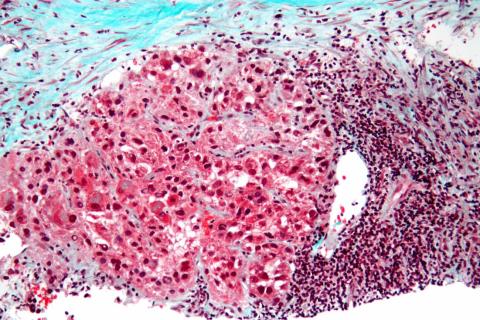
Research led by the Hospital del Mar Research Institute (Barcelona) and involving researchers from CIMA (University of Navarra) and Pompeu Fabra University (Barcelona) has revealed the existence of microproteins present almost exclusively in hepatocellular carcinoma, the most common form of liver cancer. These structures, which appear to be found in a significant percentage of patients, could be used to develop specific vaccines against this type of tumour. The results are published in the journal Science Advances.

South Korean scientists have developed a type of matrix for growing meat that releases meat flavour compounds upon reaching cooking temperature. According to the researchers, who publish their results in the journal Nature Communications, the cultured and cooked meat has "a flavour pattern similar to that of grilled beef".