
Autonomous University of Madrid
If you are the contact person for this centre and you wish to make any changes, please contact us.
Researcher at the Department of Biochemistry of the UAM, specialist in the role of microRNAs in tumor immunology.
Lecturer in the Department of Chemistry and researcher specialising in attosecond science, ultrafast processes in laser-matter interaction, atomic and molecular physics at the Autonomous University of Madrid
President of the Spanish Primatology Association (APE), coordinator of the Primatology Research Group and co-director of the Master’s Degree in Applied Ethology and Animal-Assisted Interventions at the Autonomous University of Madrid
Researcher at the Institute for Advanced Research in Chemical Sciences (IAdChem) and in the Department of Organic Chemistry at the Autonomous University of Madrid (UAM), director of the Biohybrid Materials and Systems Chemistry research group.
Professor of Biochemistry and Molecular Biology at the Autonomous University of Madrid and deputy director of the Centre for Molecular Disease Diagnosis at the Centre for Molecular Biology (CBM-UAM-CSIC).
Senior Lecturer Department of Theoretical Physics UAM Madrid
Senior Scientist at the CSIC and researcher at the Centro de Biología Molecular Severo Ochoa
Professor of Research Methods in Education at the Autonomous University of Madrid
Researcher at the UAM-CSIC Institute of Theoretical Physics and in the Department of Theoretical Physics at the Autonomous University of Madrid
Senior Lecturer in the Department of Biology at the Autonomous University of Madrid
Head of the psychiatry department at the Fundación Jiménez Diaz, psychiatry professor at the Universidad Autónoma de Madrid
Lecturer and researcher in Preventive Medicine and Public Health at the Autonomous University of Madrid
Professor of Preventive Medicine and Public Health at the Autonomous University of Madrid, researcher at CIBERESP and IMDEA-Nutrition
Lecturer at the Autonomous University of Madrid specialising in Exercise Physiology and Physical Activity and Health, Director of the Exercise Physiology and Nutrition Research Group and Vice-Dean of Employability, Postgraduate Internships and Physical Activity and Sports Sciences
Professor of Prehistory at the Autonomous University of Madrid.
Professor ad honorem of the CSIC at the Severo Ochoa Centre for Molecular Biology
Doctor in Physical Activity and Sport Sciences and researcher in the Exercise Physiology and Nutrition research group at the Autonomous University of Madrid.
Research professor at the Institute of Theoretical Physics (UAM-CSIC)
Director of the Dermatology Department of the Hospital de la Santa Creu i Sant Pau and professor at the Autonomous University of Barcelona
Pre-doctoral researcher in Ethics and Governance of Artificial Intelligence in the Department of Political Science and International Relations at the Autonomous University of Madrid
Researcher at the Institute for Food Science Research (CSIC-UAM)
Researcher at the Department of Pharmacology, the Faculty of Medicine of the Universidad Autónoma de Madrid and at the Nephrology and Hypertension Laboratory of the Instituto de Investigación Sanitaria-Fundación Jiménez Díaz in Madrid
Head of the Pathogenic Mechanisms of Alzheimer's Disease research group and researcher at the Severo Ochoa Molecular Biology Centre
Senior Researcher at the Severo Ochoa Center for Molecular Biology (CBM-CSIC-UAM)
Professor and Vice-Dean of Research and Transfer at the Faculty of Teacher Training and Education of the Universidad Autónoma de Madrid.
Professor at the Department of Psychiatry of the School of Medicine of the Universidad Autónoma de Madrid and member of CIBERSAM
Nutritional epidemiologist at CIBERESP and IMDEA Food, professor at the Autonomous University of Madrid, and assistant professor at the Harvard School of Public Health
Professor and researcher in the Department of Theoretical Physics at the Autonomous University of Madrid and at the Institute of Theoretical Physics (IFT UAM-CSIC), scientific coordinator of the entire NASA Fermi-LAT Collaboration between 2023-2025 and coordinator of the ‘Dark Matter and New Physics’ working groups of the Fermi-LAT gamma-ray collaborations (2014-16 and 2020-2022) and CTAO (2018-2020) collaborations
Assistant Professor in Zoology at the Autonomous University of Madrid
Assistant Professor in the Department of Biological and Health Psychology at the Faculty of Psychology UAM
Lecturer in Financial Economics at the Autonomous University of Madrid
Researcher at the Computer Linguistics Laboratory of the Autonomous University of Madrid (UAM) and director of Business & Language Analytics (BLA) of the Institute of Knowledge Engineering (IIC)
Professor in the Department of Preventive Medicine and Public Health at the Autonomous University of Madrid
Researcher in the department of preventative medicine and public health, Faculty of Medicine, Autonomous University of Madrid and CIBERESP
Principal investigator at the Severo Ochoa Molecular Biology Centre
Doctor in Physical Activity and Sport Sciences and researcher in the Exercise Physiology and Nutrition research group at the Autonomous University of Madrid.
'Ramón y Cajal' researcher specialising in energy poverty at the Department of Geography, Autonomous University of Madrid
Doctor in Physical Activity and Sport Sciences and researcher in the Exercise Physiology and Nutrition research group at the Autonomous University of Madrid.
Head of the African Swine Fever Virus Laboratory at the Severo Ochoa Molecular Biology Center (CBMSO)
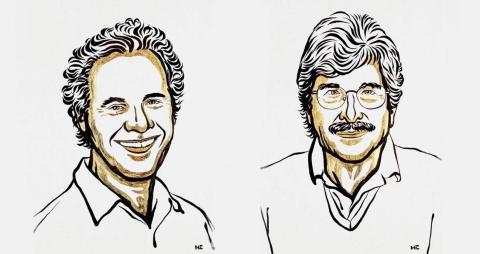
The Karolinska Institute has awarded the Nobel Prize in Medicine or Physiology to Victor Ambros and Gary Ruvkun for the discovery of microRNAs, small RNA fragments that do not contain instructions for making proteins but instead participate in the regulation of gene expression. Their role is fundamental in processes such as cell differentiation, and their alteration can influence diseases like cancer.

Large language models - Artificial Intelligence (AI) systems based on deep learning, such as the generative AI that is ChatGPT - are not as reliable as users expect. This is one of the conclusions of international research published in Nature involving researchers from the Polytechnic University of Valencia. According to the authors, in comparison with the first models and taking into account certain aspects, reliability has worsened in the most recent models, such as GPT-4 with respect to GPT-3.

Eating a vegan diet for eight weeks is associated with reductions in biological age estimates based on levels of DNA methylation, a type of chemical modification of DNA that alters the expression of genes, but not the DNA itself. This is the main conclusion of a study published in BMC Medicine in which 21 pairs of twins participated in a clinical trial. Of each pair, one person followed an omnivorous diet and the other a vegan - and lower calorie - diet during that period.

Using artificial intelligence (AI)-generated datasets to train future generations of machine learning models can contaminate their results, a concept known as ‘model collapse’, according to a paper published in Nature. The research shows that, within a few generations, original content is replaced by unrelated nonsense, demonstrating the importance of using reliable data to train AI models.

A team of physicists led by Harvard University (USA) has succeeded in linking two quantum memory nodes 35 kilometres apart using existing fibre optics in the Boston area (USA). This is the longest distance achieved to date. According to the authors, who publish their results in the journal Nature, ‘demonstrating that quantum network nodes can intertwine in the real-world environment of a busy urban area is an important step towards practical networking between quantum computers’.
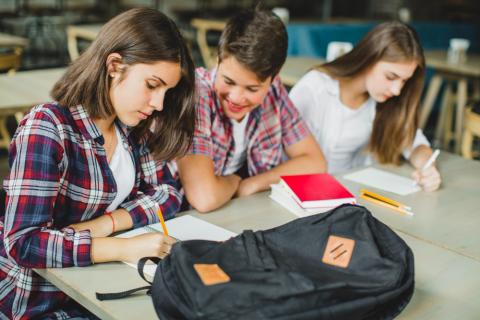
Smaller classroom sizes in schools are failing to increase the resilience of children from low-income families, according to a study published in the International Journal of Science Education. Data from more than 2,700 disadvantaged secondary school students in Japan and China show that minimising class sizes does not lead to better grades. The authors of the study claim that reducing classroom size may even decrease the likelihood of children achieving the best results.

The President of the Government, Pedro Sánchez, announced last night at the welcome dinner of the GSMA Mobile World Congress (MWC) Barcelona 2024, the construction of a foundational model of artificial intelligence language, trained in Spanish and co-official languages, in open and transparent code, and with the intention of incorporating Latin American countries. For its development, the Government will work with the Barcelona Supercomputing Center and the Spanish Supercomputing Network, together with the Spanish Academy of Language and the Association of Spanish Language Academies.
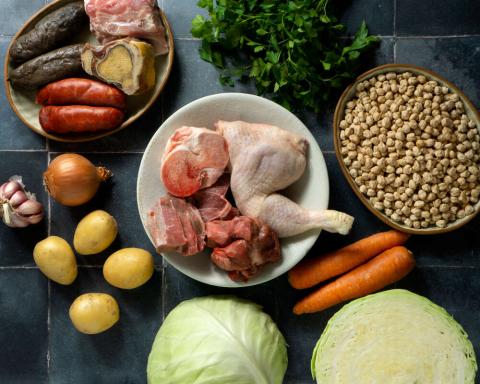
A dietary shift from animal-based foods, such as red or processed meat and eggs, to plant-based foods, such as nuts, pulses and whole grains, is associated with a reduced risk of death and diabetes or cardiovascular disease. For example, replacing 50 grams of processed meat per day with 28-50 grams of nuts is associated with a 27% decrease in cardiovascular risk. These are the conclusions of a systematic review of 37 studies published in the journal BMC Medicine.

A review of more than 100 meta-analyses and nearly 2500 studies has analysed the use of screens by children and young people and the consequences for their learning and health. Their conclusions are that, in general, the effects are small and vary according to the type of use and context. The results are published in the journal Nature Human Behaviour.
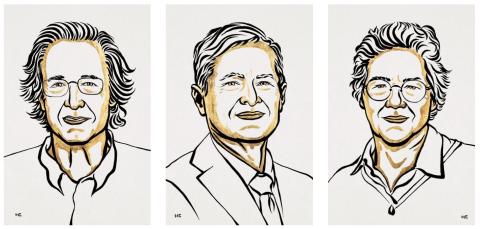
The Royal Swedish Academy of Sciences has awarded the 2023 Nobel Prize in Physics to Pierre Agostini, Ferenc Krausz and Anne L'Huillier for developing "experimental methods generating attosecond light pulses". These advances made it possible to observe the motion of particles in atoms on the shortest time scale captured by humans. An attosecond is a unit of time equivalent to one trillionth of a second, roughly the time it takes light to travel the diameter of an atom.