
Autonomous University of Madrid
If you are the contact person for this centre and you wish to make any changes, please contact us.
Researcher at the Department of Biochemistry of the UAM, specialist in the role of microRNAs in tumor immunology.
Lecturer in the Department of Chemistry and researcher specialising in attosecond science, ultrafast processes in laser-matter interaction, atomic and molecular physics at the Autonomous University of Madrid
President of the Spanish Primatology Association (APE), coordinator of the Primatology Research Group and co-director of the Master’s Degree in Applied Ethology and Animal-Assisted Interventions at the Autonomous University of Madrid
Researcher at the Institute for Advanced Research in Chemical Sciences (IAdChem) and in the Department of Organic Chemistry at the Autonomous University of Madrid (UAM), director of the Biohybrid Materials and Systems Chemistry research group.
Professor of Biochemistry and Molecular Biology at the Autonomous University of Madrid and deputy director of the Centre for Molecular Disease Diagnosis at the Centre for Molecular Biology (CBM-UAM-CSIC).
Senior Lecturer Department of Theoretical Physics UAM Madrid
Senior Scientist at the CSIC and researcher at the Centro de Biología Molecular Severo Ochoa
Professor of Research Methods in Education at the Autonomous University of Madrid
Researcher at the UAM-CSIC Institute of Theoretical Physics and in the Department of Theoretical Physics at the Autonomous University of Madrid
Senior Lecturer in the Department of Biology at the Autonomous University of Madrid
Head of the psychiatry department at the Fundación Jiménez Diaz, psychiatry professor at the Universidad Autónoma de Madrid
Lecturer and researcher in Preventive Medicine and Public Health at the Autonomous University of Madrid
Professor of Preventive Medicine and Public Health at the Autonomous University of Madrid, researcher at CIBERESP and IMDEA-Nutrition
Lecturer at the Autonomous University of Madrid specialising in Exercise Physiology and Physical Activity and Health, Director of the Exercise Physiology and Nutrition Research Group and Vice-Dean of Employability, Postgraduate Internships and Physical Activity and Sports Sciences
Professor of Prehistory at the Autonomous University of Madrid.
Professor ad honorem of the CSIC at the Severo Ochoa Centre for Molecular Biology
Doctor in Physical Activity and Sport Sciences and researcher in the Exercise Physiology and Nutrition research group at the Autonomous University of Madrid.
Research professor at the Institute of Theoretical Physics (UAM-CSIC)
Director of the Dermatology Department of the Hospital de la Santa Creu i Sant Pau and professor at the Autonomous University of Barcelona
Pre-doctoral researcher in Ethics and Governance of Artificial Intelligence in the Department of Political Science and International Relations at the Autonomous University of Madrid
Researcher at the Institute for Food Science Research (CSIC-UAM)
Researcher at the Department of Pharmacology, the Faculty of Medicine of the Universidad Autónoma de Madrid and at the Nephrology and Hypertension Laboratory of the Instituto de Investigación Sanitaria-Fundación Jiménez Díaz in Madrid
Head of the Pathogenic Mechanisms of Alzheimer's Disease research group and researcher at the Severo Ochoa Molecular Biology Centre
Senior Researcher at the Severo Ochoa Center for Molecular Biology (CBM-CSIC-UAM)
Professor and Vice-Dean of Research and Transfer at the Faculty of Teacher Training and Education of the Universidad Autónoma de Madrid.
Professor at the Department of Psychiatry of the School of Medicine of the Universidad Autónoma de Madrid and member of CIBERSAM
Nutritional epidemiologist at CIBERESP and IMDEA Food, professor at the Autonomous University of Madrid, and assistant professor at the Harvard School of Public Health
Professor and researcher in the Department of Theoretical Physics at the Autonomous University of Madrid and at the Institute of Theoretical Physics (IFT UAM-CSIC), scientific coordinator of the entire NASA Fermi-LAT Collaboration between 2023-2025 and coordinator of the ‘Dark Matter and New Physics’ working groups of the Fermi-LAT gamma-ray collaborations (2014-16 and 2020-2022) and CTAO (2018-2020) collaborations
Assistant Professor in Zoology at the Autonomous University of Madrid
Assistant Professor in the Department of Biological and Health Psychology at the Faculty of Psychology UAM
Lecturer in Financial Economics at the Autonomous University of Madrid
Researcher at the Computer Linguistics Laboratory of the Autonomous University of Madrid (UAM) and director of Business & Language Analytics (BLA) of the Institute of Knowledge Engineering (IIC)
Professor in the Department of Preventive Medicine and Public Health at the Autonomous University of Madrid
Researcher in the department of preventative medicine and public health, Faculty of Medicine, Autonomous University of Madrid and CIBERESP
Principal investigator at the Severo Ochoa Molecular Biology Centre
Doctor in Physical Activity and Sport Sciences and researcher in the Exercise Physiology and Nutrition research group at the Autonomous University of Madrid.
'Ramón y Cajal' researcher specialising in energy poverty at the Department of Geography, Autonomous University of Madrid
Doctor in Physical Activity and Sport Sciences and researcher in the Exercise Physiology and Nutrition research group at the Autonomous University of Madrid.
Head of the African Swine Fever Virus Laboratory at the Severo Ochoa Molecular Biology Center (CBMSO)

The KATRIN (Karlsruhe Tritium Neutrino Experiment) team has published the most accurate measurement to date of the upper limit of the neutrino mass in the journal Science, establishing it at 0.45 electronvolts (eV), less than a millionth of the mass of an electron. The KATRIN experiment, launched in 2018 in Germany, will finalise its neutrino mass measurement campaign this year, having reached 1,000 days of data acquisition.

Consuming certain mixtures of common food additives is linked to a slightly increased risk of developing type 2 diabetes, according to an analysis of data from more than 108,000 adults in France. The study, published in PLoS Medicine, identified five mixtures of additives frequently used in ultra-processed foods and concluded that two of them are associated with the disease: the first mixture consisted mainly of emulsifiers, preservatives and a colouring agent, and the second of acidifiers, acidity regulators, colouring agents, artificial sweeteners and emulsifiers.

An artificial intelligence (AI) model led by the company Meta is capable of translating speech and text, including direct speech-to-speech translations, from up to 101 languages in some cases. According to the research team, this model - called SEAMLESSM4T - can pave the way for fast universal translations ‘with resources to be made publicly available for non-commercial use’. The work is published in the journal Nature.

A team in the US has for the first time achieved quantum teleportation over 30 kilometres of fibre-optic cable already carrying internet data traffic, says a study published in the journal Optica. This type of teleportation would allow quantum communication to be combined with existing internet cable infrastructure.

Researchers in China have analysed data from more than 4,500 people and identified 13 proteins linked to brain ageing. In addition, changes in protein concentrations in the blood tend to peak at ages 57, 70 and 78. According to the authors, who publish the results in the journal Nature Aging, these ages may reflect transitions in human brain health at specific ages, and could therefore be important for designing possible interventions in the brain ageing process.

Unmarried people - whether single, divorced/separated or widowed - have a higher risk of having depressive symptoms than married people, says an international study. The paper, published in Nature Human Behaviour, includes data from more than 100,000 adults in China, Indonesia, Ireland, Korea, Mexico, the UK, the USA and the UK.
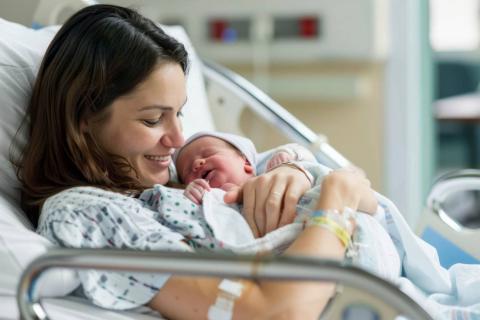
Early results from a study of newborn screening methods show that DNA analysis detects many more serious preventable or treatable diseases than standard newborn screening. The study, published today in the journal JAMA, is one of the first large-scale studies in the world to use genome sequencing as a method of newborn screening and is the first to publish preliminary results.

An international team with Spanish participation has analysed which day of the week has the highest risk of suicide mortality, and it is Monday. The research, published in The BMJ, includes more than 1,700,000 suicide cases registered in 26 countries - including Spain - from 1971 to 2019. The data also show a sharp increase in the risk of suicide on New Year's Day in most of the countries analysed. Taking these results into account, the authors propose that they should be used to define plans and awareness-raising campaigns.

A study published in the journal Nature describes a tool capable of inserting watermarks into text generated by large linguistic models - artificial intelligence (AI) systems - thereby improving their ability to identify and track artificially created content. The tool uses a sampling algorithm to subtly bias the model's choice of words, inserting a signature that can be recognised by the detection software.

The Royal Swedish Academy of Sciences has awarded the Nobel Prize in Physics 2024 to researchers John J. Hopfield and Geoffrey E. Hinton for discovering the foundations that enable machine learning with artificial neural networks. Hinton for discovering the foundational basis that enables machine learning with artificial neural networks. This technology, inspired by the structure of the brain, is behind what we now call ‘artificial intelligence’.