
Complutense University of Madrid
If you are the contact person for this centre and you wish to make any changes, please contact us.
Lecturer of Palaeontology at the Complutense University of Madrid (UCM) and affiliated researcher at CENIEH
Assistant Professor in the department of Nursing at the Complutense University of Madrid and Director of the CEST Research Group on Emotional Competence, Health, and Well-being in the Workplace
Professor of Prehistory and member of the Institute for Feminist Research at the Complutense University of Madrid
Associate Professor at Camilo José Cela University, researcher at the HM Hospitales Health Research Institute (Madrid) and collaborating researcher in the Department of Personality, Evaluation and Clinical Psychology at the Complutense University of Madrid
Professor of Astrophysics and Director of the Space Astronomy Group at the Complutense University of Madrid
Acute Cardiac Care Unit Coordinator. Cardiovascular Institute. Hospital Clínico San Carlos. Madrid; Associate Professor of Medicine at Complutense University of Madrid; and President of the Association of Ischemic Heart Disease and Acute Cardiac Care of the Spanish Society of Cardiology
Accredited professor, lecturer at the Faculty of Psychology and director of the Research Group on Testimony Psychology at the Complutense University of Madrid
Professor of Biochemistry at the Complutense University of Madrid, president of the Spanish Society of Dietetics and Food Sciences (SEDCA) and treasurer of the Spanish Federation of Nutrition, Food and Dietetics Societies (FESNAD).
Lecturer in the Department of Theoretical Physics and member of the Dynamics of Disordered Systems group at the Complutense University of Madrid
Professor and Director of the Antibiotic Resistance Unit at the Complutense University of Madrid, WHO adviser on antibiotic resistance and One Health
Researcher at the TRANSOC Institute of the Faculty of Political Science and Sociology at the Complutense University of Madrid (UCM)
Professor at the Complutense University of Madrid (UCM) and director of the Arthropod Biology and Biodiversity Research Group.
Professor of Regional Geographical Analysis and Director of the Research Group 'Forest Geography, Policy and Socioeconomics'
Professor in the Department of Mathematical Analysis at the Complutense University of Madrid, Full Member of the Royal Academy of Exact, Physical and Natural Sciences of Spain (RAC) and member of the Spanish Royal Mathematical Society (RSME)
Talent Researcher in the Department of Theoretical Physics of the Complutense University of Madrid
Retired professor of Geophysics and Meterorology in the Department of Earth Physics and Astrophysics at the Complutense University of Madrid.
Full Professor in the Department of Personality, Assessment, and Clinical Psychology at the Complutense University of Madrid and expert in unwanted loneliness
Researcher at the Optics Department of the Complutense University of Madrid
Lecturer in the Department of Immunology, Ophthalmology, and ENT at the School of Medicine of the Complutense University of Madrid
Researcher at the Institute of Geosciences, IGEO (CSIC-UCM)
Full Professor of the Department of Biodiversity, Ecology and Evolution at the Complutense University of Madrid
Professor in the Psychology Division
Lecturer of the Department of Sociology: Methodology and Theory at the Complutense University of Madrid
Psychiatrist for children and adolescents at the 12 de Octubre University Hospital and associate professor in the Legal Medicine, Psychiatry and Pathology Department of the Faculty of Medicine of UCM
Research professor at the Institute of Geosciences, IGEO (CSIC-UCM)
Professor of the Department of Earth Physics and Astrophysics at the Faculty of Physical Sciences of the Complutense University of Madrid
Professor in the Department of Biochemistry and Molecular Biology, Faculty of Medicine
Professor of Zoology at the Complutense University of Madrid (UCM)
Planetary geologist and astrobiologist at the IGEO (CSIC-UCM). Academician of the Royal Academies of Sciences and Doctors of Spain. President of the Planetary Geology Commission of the Geological Society of Spain and of the Spanish Network of Planetology and Astrobiology.
Professor of Biochemistry and Molecular Biology, director of the Biophys-Hub research group and former dean of the Faculty of Biology at the Complutense University of Madrid
Permanent tenured professor in the Prehistory Area of the Department of Prehistory, Ancient History and Archaeology at the Complutense University of Madrid
Scientific researcher in Parkinson's disease at the Complutense University of Madrid
Lecturer in the Department of Optics at the Faculty of Physical Sciences and member of the interdisciplinary research group on Computational Optics (GICO) at the Complutense University of Madrid
Adjunct professor at the International University of La Rioja (UNIR) and member of the Cognitive Psychology Research Group at the Complutense University of Madrid Measurement and Modelling of Processes (PsiMed / MEMOpro)
Professor at the UCM and member of the research group on Evolutionary and Conservation Biology
Professor in the Department of Prehistory, Ancient History and Archaeology at the Complutense University of Madrid
Professor of Atomic, Molecular, and Nuclear Physics in the Department of Structure of Matter, Thermal Physics, and Electronics at the Complutense University of Madrid (UCM) and researcher in Gamma Ray Astrophysics at the Institute of Particle Physics and Cosmos (IPARCOS) at UCM
CSIC geologist and paleontologist at the Institute of Geosciences (CSIC-UCM)
UNA4CAREER postdoctoral researcher in the Condensed Matter Theoretical Physics Group of the Complutense University of Madrid
Neurologist at the Department of Neurology of the Hospital Universitario 12 de Octubre and professor at the Department of Medicine of the Universidad Complutense de Madrid
Head of Cardiology at San Carlos Clinical Hospital and professor at Complutense University of Madrid
Professor of Ergonomics, Faculty of Psychology, Colour Blindness and Design Research Group
PhD in Planetary Geology and researcher at the Lunar and Planetary Laboratory of the University of Arizona-UCM who applied for this ESA selection process
Permanent lecturer, Faculty of Psychology, Daltonism and Design Research Group
Lecturer and principal investigator of the Nano-Immunotherapies group in the Department of Cell Biology at the Complutense University of Madrid
Pre-doctoral researcher in the Department of Earth Physics and Astrophysics, School of Physical Sciences, Complutense University of Madrid
Specialist in immunodeficiencies and Associate Professor of Paediatrics at the Complutense University of Madrid
Professor of Biochemistry and Molecular Biology at the Complutense University of Madrid and vice-president of the Spanish Observatory of Medicinal Cannabis
Professor at the Department of Applied Sociology, Faculty of Education, Complutense University of Madrid
Senior Lecturer (PhD) in the Department of Algebra, Geometry and Topology at the Complutense University of Madrid
Researcher in the department of Physics of the Earth and Astrophysics at the Complutense University of Madrid (UCM).
Professor of Geophysics in the Department of Earth Physics and Astrophysics, School of Physical Sciences, Complutense University of Madrid
Professor of Theoretical Physics
Faculty of Physical Sciences
Complutense University of Madrid
Associate Professor, Department of Public and Maternal and Child Health, Faculty of Medicine, Universidad Complutense de Madrid
professor of Obstetrics and Gynaecology at the Universidad Complutense de Madrid, ex-president of the Spanish Association for the Study of Menopause (AEEM)
Director of Research and Innovation at the Foundation for Climate Research and Associate Professor in the Department of Algebra, Geometry and Topology at the Complutense University of Madrid (UCM).
Economist at the Complutense University of Madrid, President of SESPAS.
Professor of the Department of Optics at the Faculty of Physical Sciences of the Complutense University of Madrid and Director of the Research Group "Laser Physics, Quantum Optics and Nonlinear Optics"
Immunologist
Permanent Lecturer in the Department of Biochemistry and Molecular Biology at the Complutense University of Madrid
Researcher in the Department of Experimental Psychology, Cognitive Processes and Speech Therapy of the Faculty of Psychology
Professor in the Department of Prehistory, Ancient History and Archaeology
Professor of the Department of Microbiology and Parasitology, Faculty of Pharmacy, Complutense University of Madrid
Lecturer in the Department of Immunology, Ophthalmology, and ENT at the School of Medicine of the Complutense University of Madrid

A study has associated the consumption of the sweetener erythritol with an increased risk of cardiovascular disease, specifically myocardial infarction and stroke. The data are published in the journal Nature Medicine.
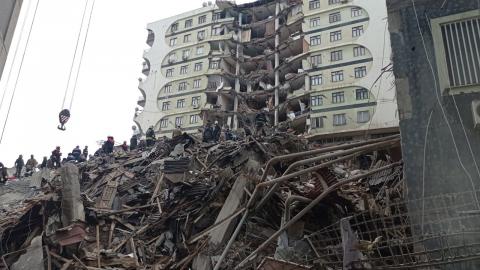
Early this morning, an earthquake with a magnitude of 7.8 struck southeastern Turkey and northern Syria. The authorities have reported thousands of deaths and extensive material damage. A second earthquake has occurred further north than the previous one.
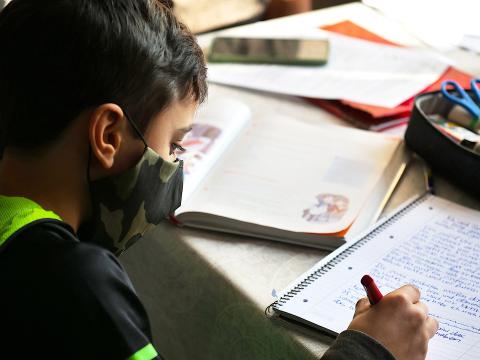
A meta-analysis of 42 studies from 15 countries, including Spain, concludes that the covid-19 pandemic caused learning delays in school-aged children and a loss of knowledge equivalent to 35% of the learning of a school year. The research, published in Nature Human Behaviour, highlights that these effects persisted over time.
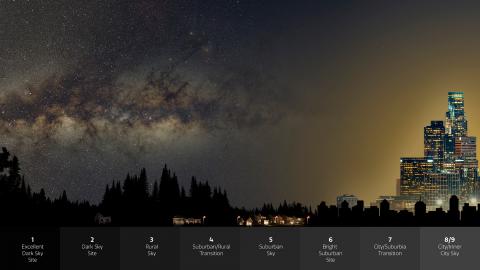
The brightness of the night sky has increased by 7 to 10 % per year (depending on the region of the world) in the range visible to the human eye, according to an analysis based on 51,000 observations made with the naked eye by citizen scientists between 2011 and 2022. According to the research, published in Science, this increase is faster than what can be observed with satellites; satellites cannot detect blue emissions from LED lights, which are increasingly used in street lighting.
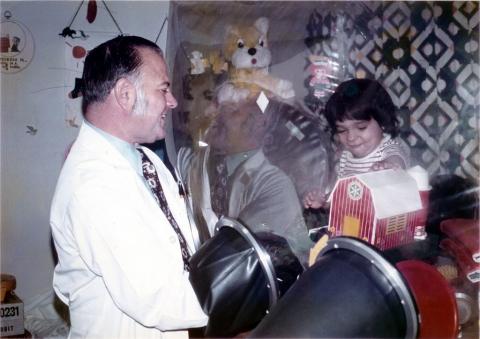
Bubble boy syndrome is a very serious condition caused by combined immunodeficiency. It is sometimes caused by certain mutations in the gene that codes for the Artemis protein. A phase I-II clinical trial has tested a gene therapy that adds a correct copy of the gene. The results are published in the journal NEJM.
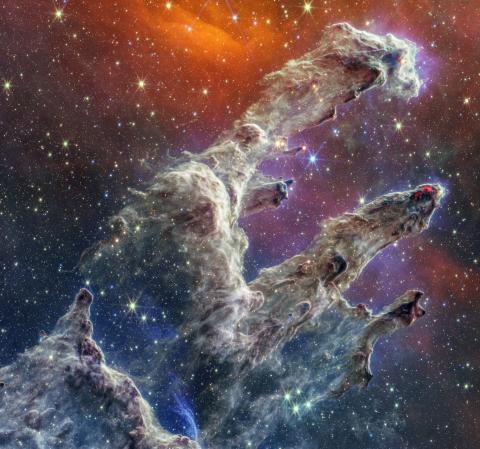
Two decades of work with numerous setbacks, a budget of more than 10 billion dollars and a journey of 1.5 million kilometres to provide us with images of the universe in unprecedented detail have led Science magazine to choose the James Webb Space Telescope (JWST) as the science breakthrough of 2022.
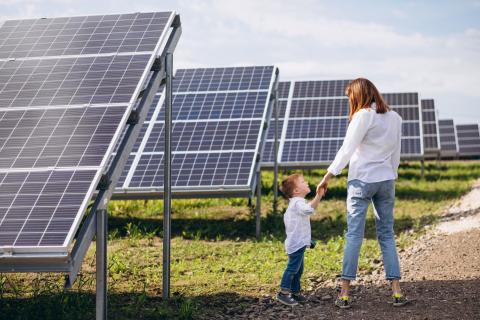
Based on the Decalogue of recommendations for climate change communication signed in 2018 by more than 80 media outlets, environmental communication professionals from all over Spain, together with the scientific team of the Climate Change Communication Observatory, have drawn up the new Decalogue 2022, a guide for the social communication of the climate crisis. A summarised version is reproduced below.
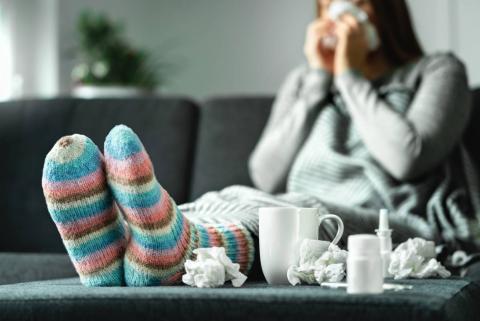
A study published in the journal Science reports preclinical results of a new vaccine model that is intended to work against all types of influenza. The prototype, which uses mRNA-based technology, includes antigens from all 20 known influenza subtypes.
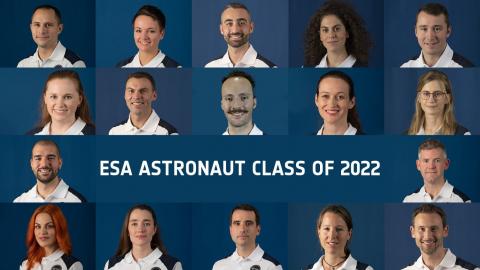
The European Space Agency (ESA) has just announced who will form part of its new generation of astronauts and there are two Spaniards among those selected: Pablo Álvarez and Sara García (the latter, in reserve). They thus become the third and fourth Spanish astronauts in history, after NASA's Michael López-Alegría (with Spanish and US nationality) and Pedro Duque, the first Spanish astronaut to be selected by ESA in 1992. No Spanish candidate was selected in the European agency's 1998 and 2008 calls for applications.

The EMA's annual European Surveillance of Veterinary Antimicrobial Consumption (ESVAC) report shows that sales of antibiotics for animal use have decreased by 47% between 2011 and 2021. In addition, sales of antibiotics considered "critically important" for use in humans have also decreased.