Health Institute Carlos III
If you are the contact person for this centre and you wish to make any changes, please contact us.
Director of the National Centre for Tropical Medicine (CNMT) at the Carlos III Health Institute
PhD in Pharmacy, Professor of Human Physiology at the University of Navarra, member of the CIBER Physiopathology of Obesity, Carlos III Health Institute and IDISNA (Navarra)
Head of the Influenza and other Respiratory Virus Surveillance Group of the National Epidemiology Centre.
Researcher at the Reference and Research Laboratory in Mycology, National Microbiology Centre, Instituto de Salud Carlos III
Senior Scientist at the Health Institute Carlos III
HIV, STI and hepatitis B and C Surveillance Unit. National Centre of Epidemiology, Health Institute Carlos III
Researcher in social epidemiology, public health and biostatistics
Researcher with a PhD employed at the National Epidemiology Centre of the Carlos III Health Institute (ISCIII)
Research scientist and member of the Department of Climate Change, Health and the Urban Environment at the Carlos III Health Institute
Senior Scientist at the Special Pathogens Research and Reference Laboratory of the National Microbiology Centre of the Carlos III Health Institute
Director and Research Scientist at the Institute for Rare Diseases Research (IIER), Carlos III Health Institute (ISCIII)
Researcher at the National Center for Microbiology - Carlos III Health Institute
Senior scientist at the Reference Laboratory for Influenza and Respiratory Viruses of the National Microbiology Centre.
Scientific researcher at the National Epidemiology Centre - Carlos III Institute of Health
Head of the Respiratory Virus and Influenza Research Group of the Carlos III Health Institute
Full professor of Pathological Anatomy at the University of Oviedo, Scientific Director of the Principality of Asturias Biobank (BioPA) and Coordinator of the Organoid hub of the ISCIII Biomodels and Biobanks platform
Senior Scientist, Immunology Laboratory, Carlos III Health Institute
Research Professor at IDIBAPS-Hospital Clínic de Barcelona and Scientific Director of CIBEREHD - Carlos III Health Institute
Researcher in Vaccine-Preventable Disease Epidemiology at the National Centre of Epidemiology of the Health Institute Carlos III and member of CIBERESP
Scientific researcher at the Reference and Research Laboratory for Immunopreventable Viral Diseases of the National Microbiology Centre - Carlos III Health Institute
Research professor and member of the Departament on Climate Change, Health and the Urban Environment at the Carlos III Health Institute
Senior Researcher, Head of the Enterovirus and Viral Gastroenteritis Unit (Reference and Research Laboratory for Immunopreventable Viral Diseases), Centro Nacional de Microbiología, Instituto de Salud Carlos III
Head of the Central Scientific-Technical Units and Head of the Veterinary Unit of the Carlos III Health Institute
Head of the National Reference Laboratory for Gastroenteritis-Producing Viruses of the National Microbiology Centre - Carlos III Health Institute
Postdoctoral researcher at the Instituto de Investigaciones Raras Health Institute Carlos III
Virologist at the Reference Laboratory for Influenza and Respiratory Viruses of the National Microbiology Centre - Carlos III Health Institute
Cancer epidemiologist and Director General of the Carlos III Health Institute
Researcher at the National Epidemiology Centre of the Carlos III Health Institute, Associate Professor of Preventive Medicine and Public Health at the University of Alcalá.
Researcher at the National Epidemiology Centre (CNE-ISCIII)
Scientific researcher at the Cancer and Environmental Epidemiology Unit of the National Epidemiology Centre, Carlos III Health Institute, member of CIBERESP and co-coordinator of the Cancer Epidemiological Surveillance Sub-programme - VICA of CIBERESP
Senior Researcher at the Carlos III Health Institute, Head of the Neuro-oncology Unit at the Chronic Diseases Research Unit (UFIEC-ISCIII)
ICREA Research Professor, Director of Andero Lab and the Rodent Behavioral Core at the Autonomous University of Barcelona (UAB), and researcher in the Department of Psychobiology and Methodology of Health Sciences at the UAB and at the Carlos III Health Institute, CIBERSAM
Assistant Professor in the Department of Preventive Medicine and Public Health at the University of Valencia, and researcher at the CIBER Centre for the Physiopathology of Obesity and Nutrition (CIBEROBN) at the Carlos III Institute
Researcher at the Reference Laboratory for Influenza and Respiratory Viruses at the Centro Nacional de Microbiología - Instituto de Salud Carlos III
Medical Epidemiologist at the National Epidemiology Centre - Carlos III Health Institute
Researcher in the Viral Biology laboratory of the Carlos III Health Institute
Senior Scientist at the Carlos III Health Institute, in the area of Environmental Toxicology of the National Center for Environmental Health
HIV, STI and hepatitis B and C Surveillance Unit. National Centre of Epidemiology, Health Institute Carlos III

Intimate partner violence is associated with an increased risk of depression and miscarriage, according to a systematic review of the scientific literature published since 1970. Sexual abuse in childhood is associated with an increased risk of alcohol use disorder and self-harm, says the study published in Nature Medicine. According to its authors, this analysis of 229 previous studies reveals that intimate partner violence and childhood sexual abuse have a more extensive impact on health than previously described.

Synthetic embryos, artificial placentas, genome editing... Advances in biology and medicine keep bringing up thorny ethical questions. Here's an overview of Spain’s many bioethics committees, which can be useful resources for journalists.

The Karolinska Institute has awarded the Nobel Prize in Medicine or Physiology to Katalin Karikó and Drew Weissman for their groundbreaking discoveries, which have radically changed our understanding of how mRNA interacts with our immune system, and made it possible to develop vaccines at unprecedented speed during the covid-19 pandemic.
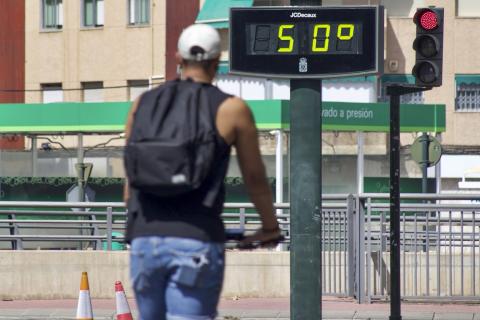
On the eve of an episode of unusually high temperatures for this time of year, it is time to take stock of the summer we have experienced, characterised by a succession of extreme weather phenomena in the form of heat waves, drought and torrential rains. The seriousness and complexity of these problems and their repercussions in many areas, especially on health, make it urgent to set up the Health and Climate Change Observatory approved last July, with a stable and independent structure.

Chronic exposure to various air pollutants has been linked to an increased risk of stroke, but the short-term effects have been less well studied. A review of 110 papers and more than 18 million stroke cases shows that recent exposure - in the five days prior to stroke - also increases the likelihood of stroke. The results are published in the journal Neurology.
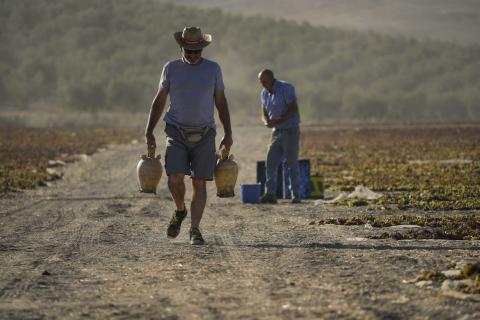
Counting deaths attributable to the effects of high temperatures is basic as a public health surveillance tool, but it should not become the only research objective. It is necessary to know why the population in some places adapts better than others to heat waves, what variables influence them, and to modify them when possible.

Living near green spaces over a long period of time is associated with better health, an association more marked in women and white people than in men and black people, according to a study conducted in four US cities. The analysis concludes that exposure to urban green space between 1985 and 2006 is associated with slower epigenetic ageing, and that this association is stronger in disadvantaged neighbourhoods. The international team publishing this paper in Science Advances includes a researcher from ISGlobal in Barcelona.
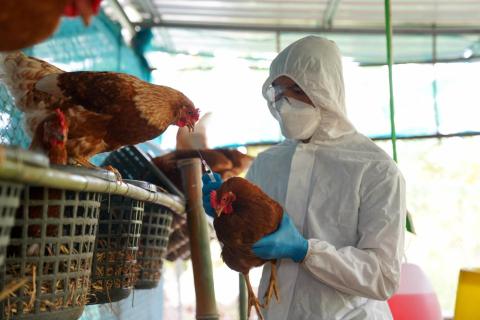
Although outbreaks of H5N1 avian influenza have reached record numbers in recent years, human infections remain anecdotal. A study published today in Nature identifies a protein responsible for inhibiting the replication of this virus in humans, while 'human' flus are able to evade it. The authors propose that this protein with antiviral activity evolved in primates and consider that resistance or sensitivity to it should be taken into account when assessing the zoonotic potential of avian influenza viruses.
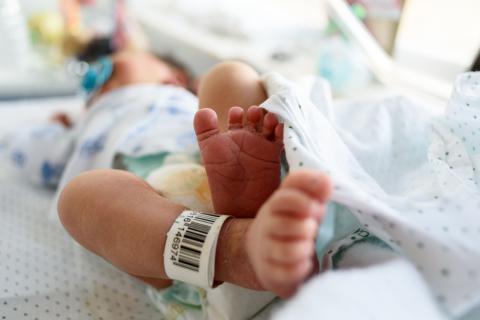
On 5 April, the UK National IHR Focal Point informed WHO of an increase in severe myocarditis in neonates associated with enterovirus infection in Wales (UK). Between June 2022 and April 2023, ten hospitalised neonates with a positive PCR for enterovirus were found to have myocarditis. Seven of the ten cases were confirmed to have coxsackievirus B3 or coxsackievirus B4. As of 5 May 2023, one patient remained hospitalised and one patient had died. According to the WHO statement, although enterovirus infections are common in neonates and infants, the reported increase in myocarditis - inflammation of heart muscle tissue - with severe outcome associated with enterovirus infection is unusual.
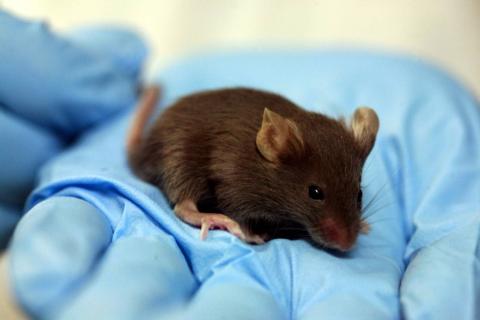
A drug in gel form cured 100 percent of mice with a very aggressive brain tumor. The authors hope that this is a first step towards helping human patients with glioblastoma, one of the most dangerous brain tumors in humans. The article is published today in PNAS.